A damaged, decayed, or worn tooth does not have to mean losing that tooth for good. Dental restoration covers the range of treatments that repair damaged teeth and rebuild your bite, so you can keep chewing, speaking, and smiling with confidence.
At SmileWorks Dental, we offer a full range of restorative treatments for Meridian patients dealing with everything from a small cavity to more extensive tooth damage. Our approach focuses on saving your natural teeth whenever possible, which is part of the family dentistry philosophy we bring to every patient.
What Is Dental Restoration?
Dental restoration is a broad term for treatments that repair or replace damaged tooth structure. This can mean something as simple as a filling for a small cavity, or something more involved like a crown to protect a tooth that has been significantly weakened by decay, a crack, or previous dental work.
The goal behind every restorative treatment is the same: stop further damage and return the tooth to normal function. According to the Centers for Disease Control and Prevention, a tooth with a cavity may need only a filling if caught early, but a cavity that reaches deeper into the tooth can require more extensive treatment such as a crown or root canal. Catching a problem at the filling stage almost always means a simpler, faster visit than waiting until the damage has spread.
Common Restorative Treatments We Offer
Restorative dentistry covers a wide range of treatments depending on how much of the tooth structure needs repair or replacement. At SmileWorks, our restorative options include:
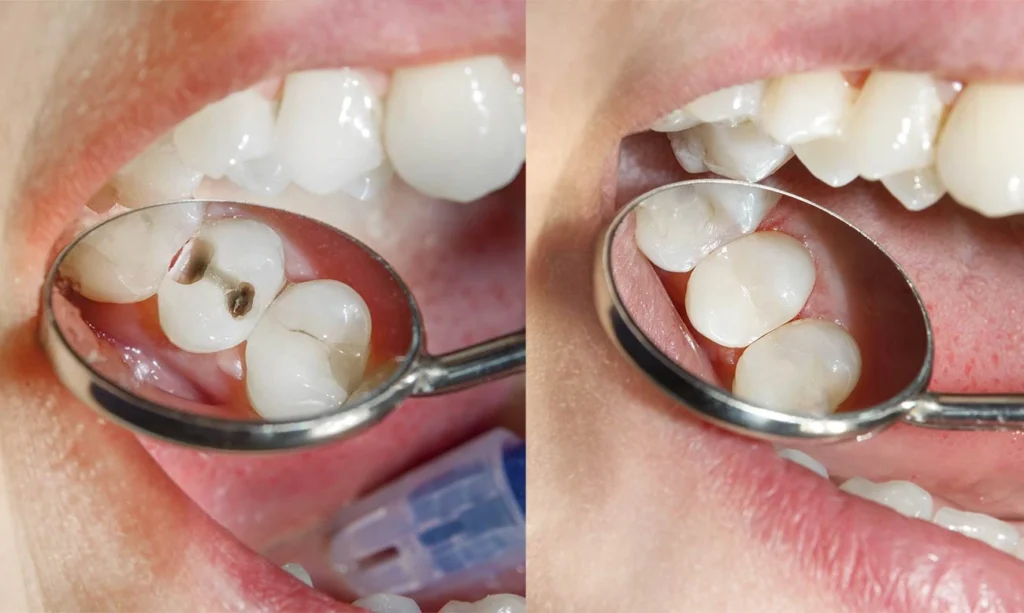
- Fillings: Repairing small to moderate cavities with tooth-colored composite material that blends naturally with your smile.
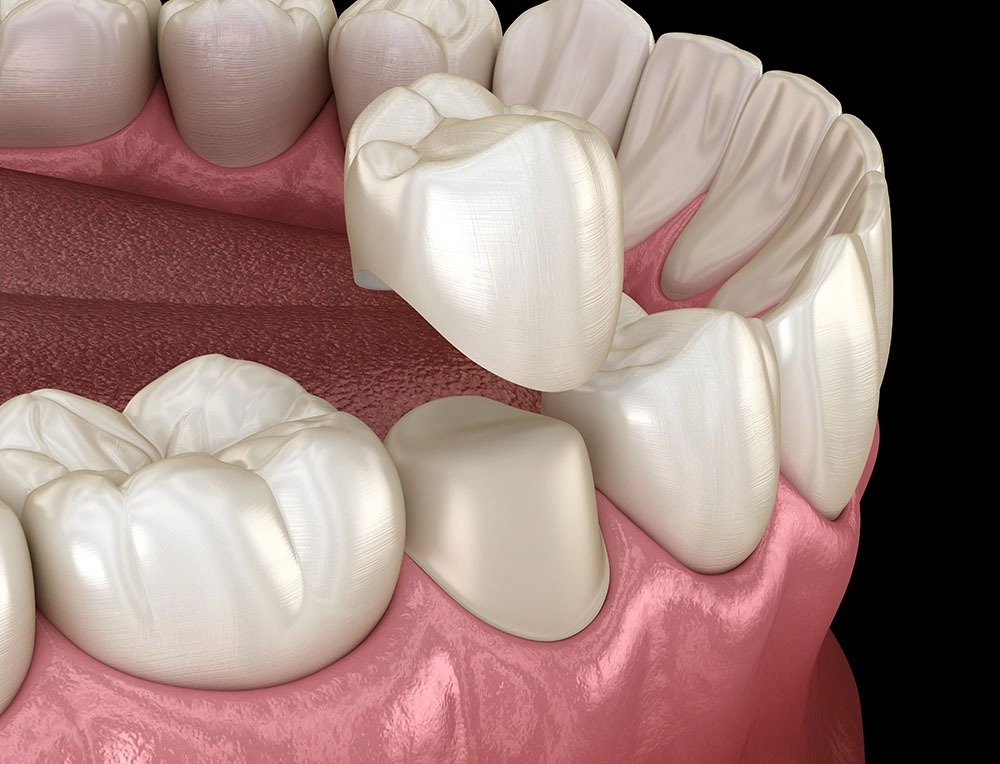
- Crowns: Covering and protecting a tooth that has been weakened by decay, a large filling, or a crack, restoring its strength and shape. Learn more about our crowns.
- Bridges: Replacing one or more missing teeth using a fixed prosthetic anchored to nearby teeth or implants. Learn more about our bridges.
- Dental implants: Replacing a missing tooth root with a titanium post, giving you a long-term foundation for a new crown. Learn more about dental implants.
Each of these treatments serves a different purpose depending on how much of the natural tooth remains and what caused the damage in the first place. Some patients need only one of these treatments, while others benefit from a combination, such as a filling on one tooth and a crown on another.
How We Decide Which Treatment Is Right for You
Choosing the right restorative treatment depends on several factors, including the size and location of the damage, the strength of the remaining tooth structure, and your overall oral health. We evaluate each of these carefully before recommending a treatment plan.
In many cases, a small cavity caught early only needs a simple filling, while more significant decay or a fractured tooth may call for a crown to fully protect what remains. If decay has reached the nerve of the tooth, a root canal may come first to remove the infection before a crown is placed on top. When a tooth cannot be saved or is already missing, we look at whether a bridge or implant makes more sense based on the condition of the surrounding teeth and bone. Underlying issues like gum disease can also affect which restorative option will hold up best over time, so we take a full picture of your oral health into account before moving forward.
Why Addressing Damage Early Matters
Restorative treatment tends to be simpler, faster, and more affordable the earlier it happens. A small cavity that could be fixed with a quick filling today can turn into a cracked tooth requiring a crown, or worse, an infection requiring a root canal, if it goes unaddressed for months or years.
Beyond cost and convenience, delaying restorative treatment puts the health of the tooth itself at greater risk. Untreated decay does not stay contained. It spreads deeper into the tooth over time, which is why we encourage patients to come in as soon as they notice sensitivity, visible damage, or discomfort rather than waiting to see if it gets worse on its own.
Why Choose SmileWorks Dental for Restorative Care
Choosing where to get restorative work done matters just as much as catching the problem early. Our team takes a family-oriented approach with every patient, and Dr. Daron Lind believes in walking you through exactly what your tooth needs and why before recommending any treatment. We also speak Spanish in our office, which many patients throughout the Treasure Valley have told us makes a real difference in feeling comfortable here.
Because we handle everything from simple fillings to crowns, bridges, root canals, and implants under one roof, you never have to be referred elsewhere to complete your treatment. That means fewer new offices to get comfortable with and a team that already understands your full dental history.
Trust SmileWorks Dental With Your Smile Care
SmileWorks Dental has served Meridian and the greater Treasure Valley for more than 17 years, and Dr. Daron Lind built the practice on the idea that dentistry should feel personal rather than rushed. Whether you need a simple filling or a more involved restorative plan, we take the time to explain your options clearly so you always understand what to expect and why we recommend it.
We also make treatment more accessible through flexible payment options, including CareCredit financing and our in-house Smile Plan for patients without dental insurance. If you have a damaged or decayed tooth that needs attention, our team is ready to help, and you can contact our office to schedule a consultation.